Hunter in the Wild
Hunter in the Wild
Hunter in the Wild
Board Game
Board Game
Board Game
Overview
Overview
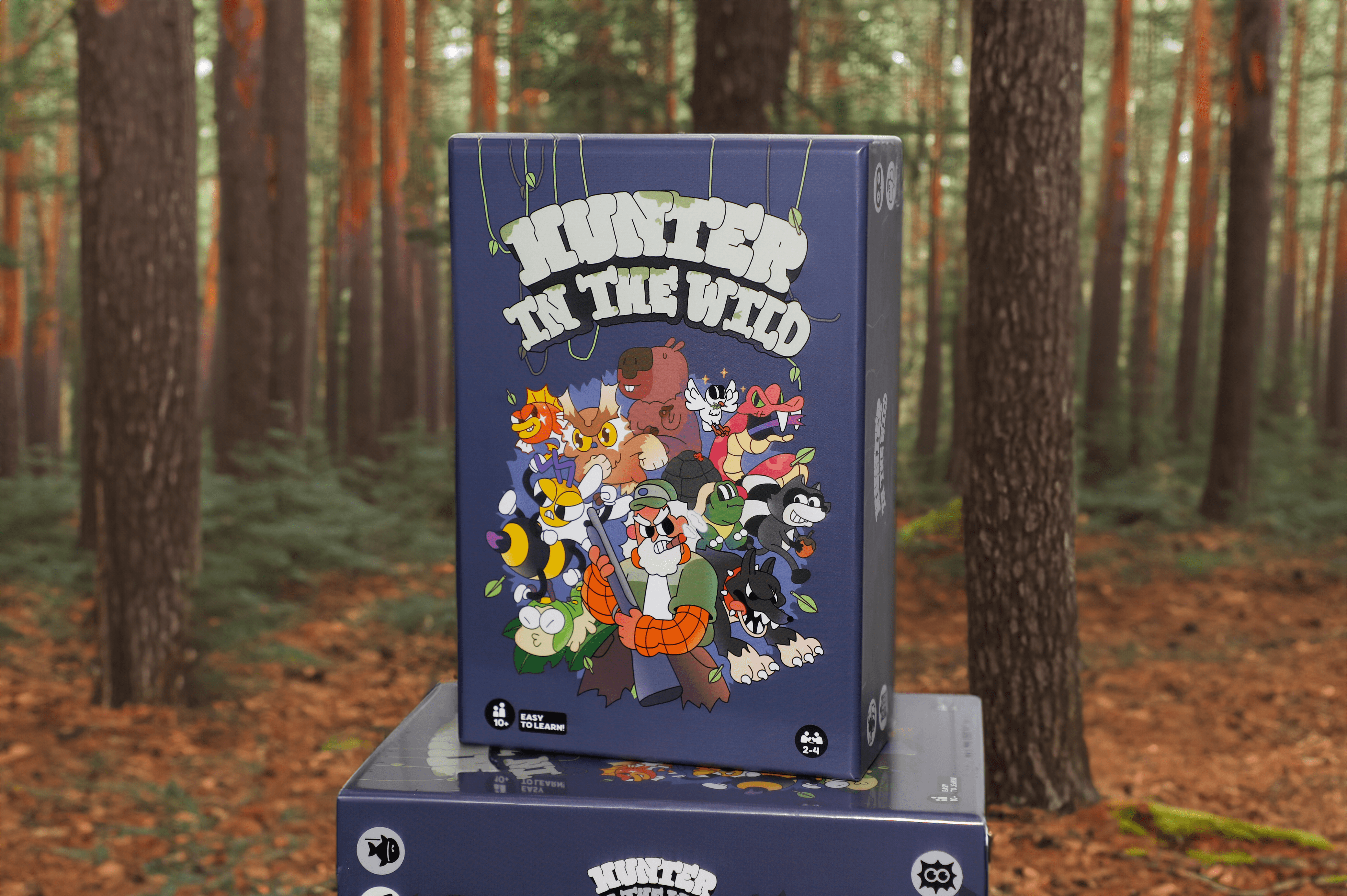
Hunter in the Wild is a strategy based board game created and manufactured by me. This is the first ever game I designed as part of my board game company: SmartMove Card Games
Hunter in the Wild is a strategy based board game created and manufactured by me. This is the first ever game I designed as part of my board game company: SmartMove Card Games
The objective of “Hunter in the Wild” is to be the player with the most points towards the end of 15 rounds of gameplay. My game is for 2-4 players, and players score points by collecting and stashing various sets of similar animal cards. The more valuable cards are harder to come across but are therefore worth more. Players will collect cards from “The Environment," from which they will build their hand and sets. After stashing a set of 4 or more of the same card, users are granted a free bonus action known as a "trait." This will grant them a small boost or advantage to help further their chance of winning.
The objective of “Hunter in the Wild” is to be the player with the most points towards the end of 15 rounds of gameplay. My game is for 2-4 players, and players score points by collecting and stashing various sets of similar animal cards. The more valuable cards are harder to come across but are therefore worth more. Players will collect cards from “The Environment," from which they will build their hand and sets. After stashing a set of 4 or more of the same card, users are granted a free bonus action known as a "trait." This will grant them a small boost or advantage to help further their chance of winning.
Tools Used

Figma
Design Tool

Photoshop
Design Tool

Illustrator
Programming Language

Procreate
Design Tool
Tools Used
Figma
Design Tool
Photoshop
Design Tool
Illustrator
Programming Language
Procreate
Design Tool
Tools Used
Figma
Design Tool
Photoshop
Design Tool
Illustrator
Programming Language
Procreate
Design Tool
Created
Created
2023
Process
Process
Early Iterations
The original inspiration and concept came through scrolling through various Japanese-style artwork on Behance. I had really enjoyed the cartoony bright saturated style and it really felt like everything popped well, which would be perfect for a board game
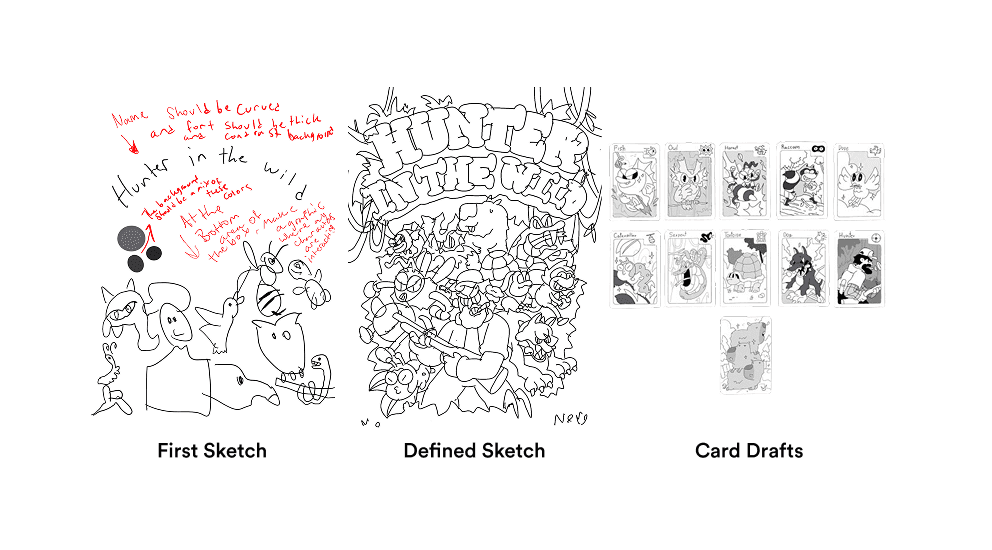
Through iterative cycles, I thought of themes, different card ideas, rules, and a cohesive board game concept after deciding on an art style. I started by drafting up rough concepts in Procreate and slowly adding more detail to iterations. By asking friends and professionals for feedback while also spending tens of hours researching other board games, I was able to come up with my final version of the game.
Design Decisions
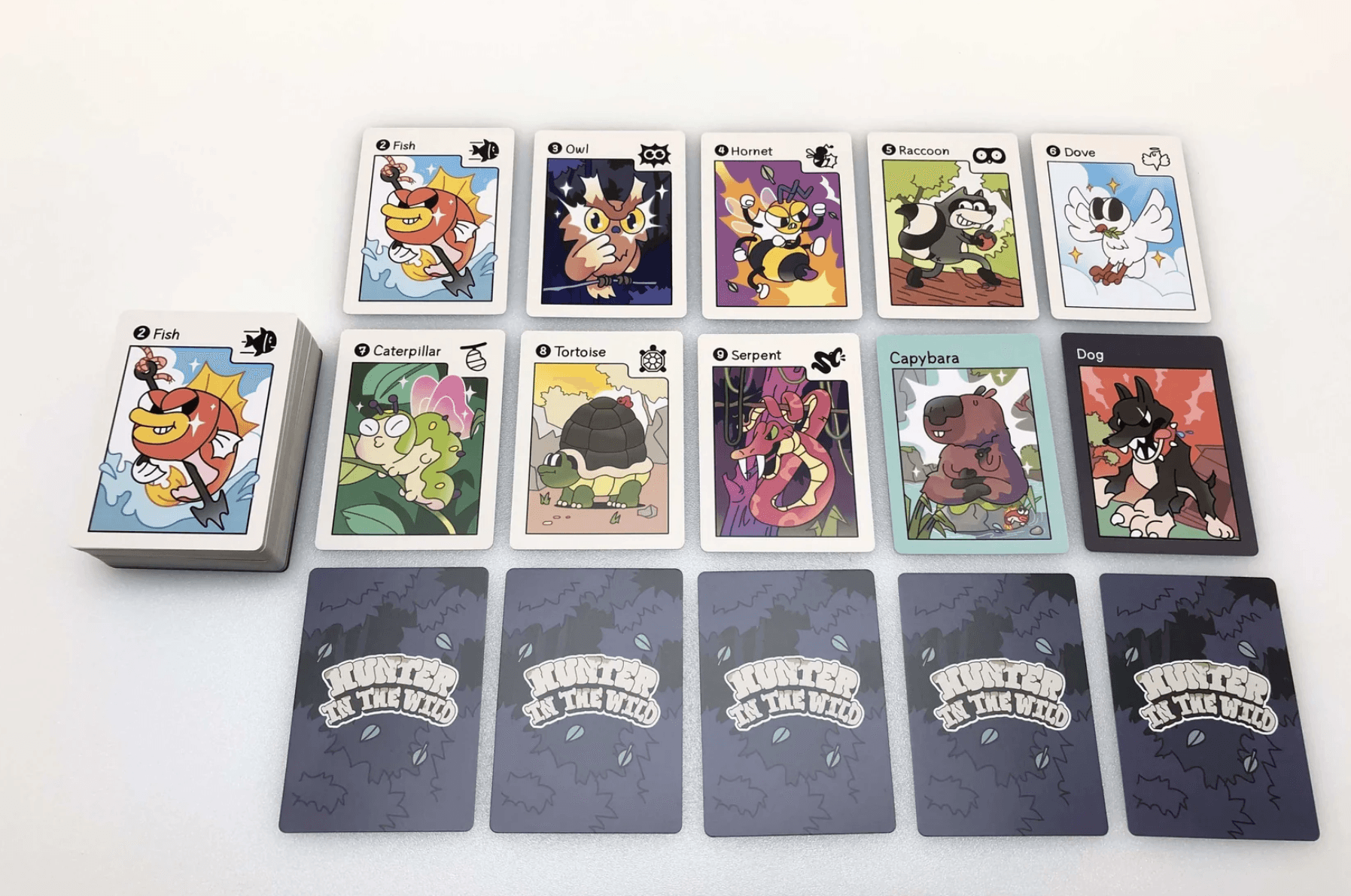
The visual direction came from wanting every card to feel alive and expressive. I leaned into a cartoony, high-contrast style (as mentioned in the "Early Iterations"), where each animal character has a distinct silhouette and color blocking so players can tell them apart at a glance without needing to read any text. The dark navy on the card backs and box was a deliberate choice to create tension and contrast against the bright, saturated character art, while still keeping the overall tone fun and approachable rather than too serious.
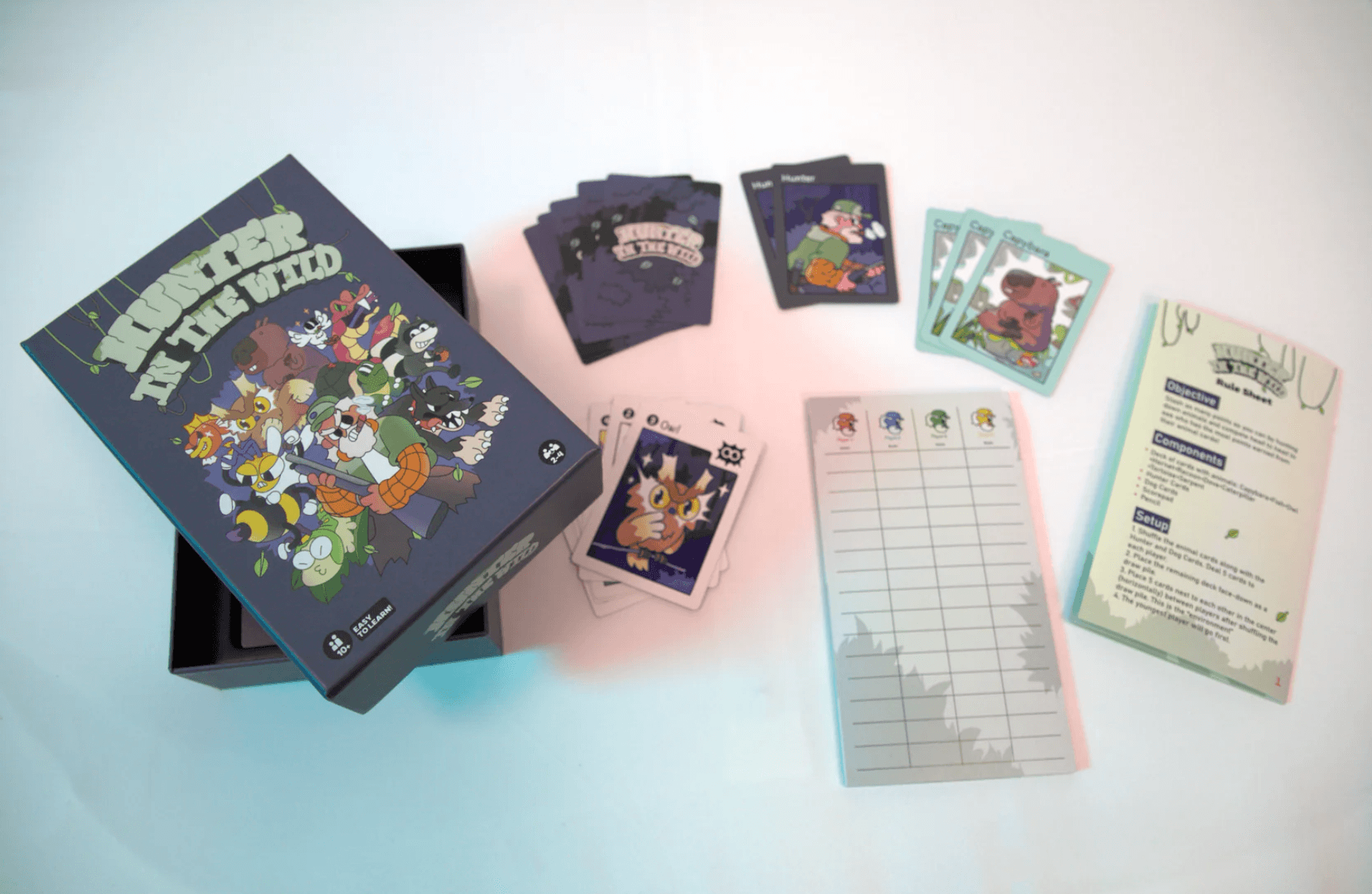
A big part of the design process was figuring out how to make cards readable under real gameplay conditions, where people are holding them at arm's length and making quick decisions. I kept the layouts clean and leaned on a simple icon system to communicate mechanics without crowding the illustrations. Hunter cards use a darker treatment compared to the animal cards, which is intentional so players can instantly recognize the card type before they even read it.
I wanted the box to do more than just hold the game. The lid illustration pulls every character into one chaotic scene, which sets the tone before anyone even opens it. Inside, the score pad, rule sheet, and card decks are all designed around the same visual language, using the same color-coded icons and consistent styling across every component so the whole thing feels like a unified system rather than pieces that were just thrown together. During the manufacturing process as well, I chose to use very high-quality materials, making the box feel like you are opening an Apple product.
Design Decisions
The visual direction came from wanting every card to feel alive and expressive. I leaned into a cartoony, high-contrast style (as mentioned in the "Early Iterations"), where each animal character has a distinct silhouette and color blocking so players can tell them apart at a glance without needing to read any text. The dark navy on the card backs and box was a deliberate choice to create tension and contrast against the bright, saturated character art, while still keeping the overall tone fun and approachable rather than too serious.
A big part of the design process was figuring out how to make cards readable under real gameplay conditions, where people are holding them at arm's length and making quick decisions. I kept the layouts clean and leaned on a simple icon system to communicate mechanics without crowding the illustrations. Hunter cards use a darker treatment compared to the animal cards, which is intentional so players can instantly recognize the card type before they even read it.
I wanted the box to do more than just hold the game. The lid illustration pulls every character into one chaotic scene, which sets the tone before anyone even opens it. Inside, the score pad, rule sheet, and card decks are all designed around the same visual language, using the same color-coded icons and consistent styling across every component so the whole thing feels like a unified system rather than pieces that were just thrown together. During the manufacturing process as well, I chose to use very high-quality materials, making the box feel like you are opening an Apple product.
Design Decisions
The visual direction came from wanting every card to feel alive and expressive. I leaned into a cartoony, high-contrast style (as mentioned in the "Early Iterations"), where each animal character has a distinct silhouette and color blocking so players can tell them apart at a glance without needing to read any text. The dark navy on the card backs and box was a deliberate choice to create tension and contrast against the bright, saturated character art, while still keeping the overall tone fun and approachable rather than too serious.
A big part of the design process was figuring out how to make cards readable under real gameplay conditions, where people are holding them at arm's length and making quick decisions. I kept the layouts clean and leaned on a simple icon system to communicate mechanics without crowding the illustrations. Hunter cards use a darker treatment compared to the animal cards, which is intentional so players can instantly recognize the card type before they even read it.
I wanted the box to do more than just hold the game. The lid illustration pulls every character into one chaotic scene, which sets the tone before anyone even opens it. Inside, the score pad, rule sheet, and card decks are all designed around the same visual language, using the same color-coded icons and consistent styling across every component so the whole thing feels like a unified system rather than pieces that were just thrown together. During the manufacturing process as well, I chose to use very high-quality materials, making the box feel like you are opening an Apple product.
Further Development
In terms of further development, I have manufactured a new batch with an extra rule sheet called "Venomous Rules" that includes optional rules that can add various twists to keep the game from being repetitive.
I am currently working on getting my game into in-person physical stores as well as continuing to get feedback from various user groups now that the game is actually fully manufactured and produced.
Further Development
In terms of further development, I have manufactured a new batch with an extra rule sheet called "Venomous Rules" that includes optional rules that can add various twists to keep the game from being repetitive.
I am currently working on getting my game into in-person physical stores as well as continuing to get feedback from various user groups now that the game is actually fully manufactured and produced.
Further Development
In terms of further development, I have manufactured a new batch with an extra rule sheet called "Venomous Rules" that includes optional rules that can add various twists to keep the game from being repetitive.
I am currently working on getting my game into in-person physical stores as well as continuing to get feedback from various user groups now that the game is actually fully manufactured and produced.