
Salesforce
Salesforce
Salesforce
Product Redesign Competition
Product Redesign Competition
Product Redesign Competition
Overview
Overview
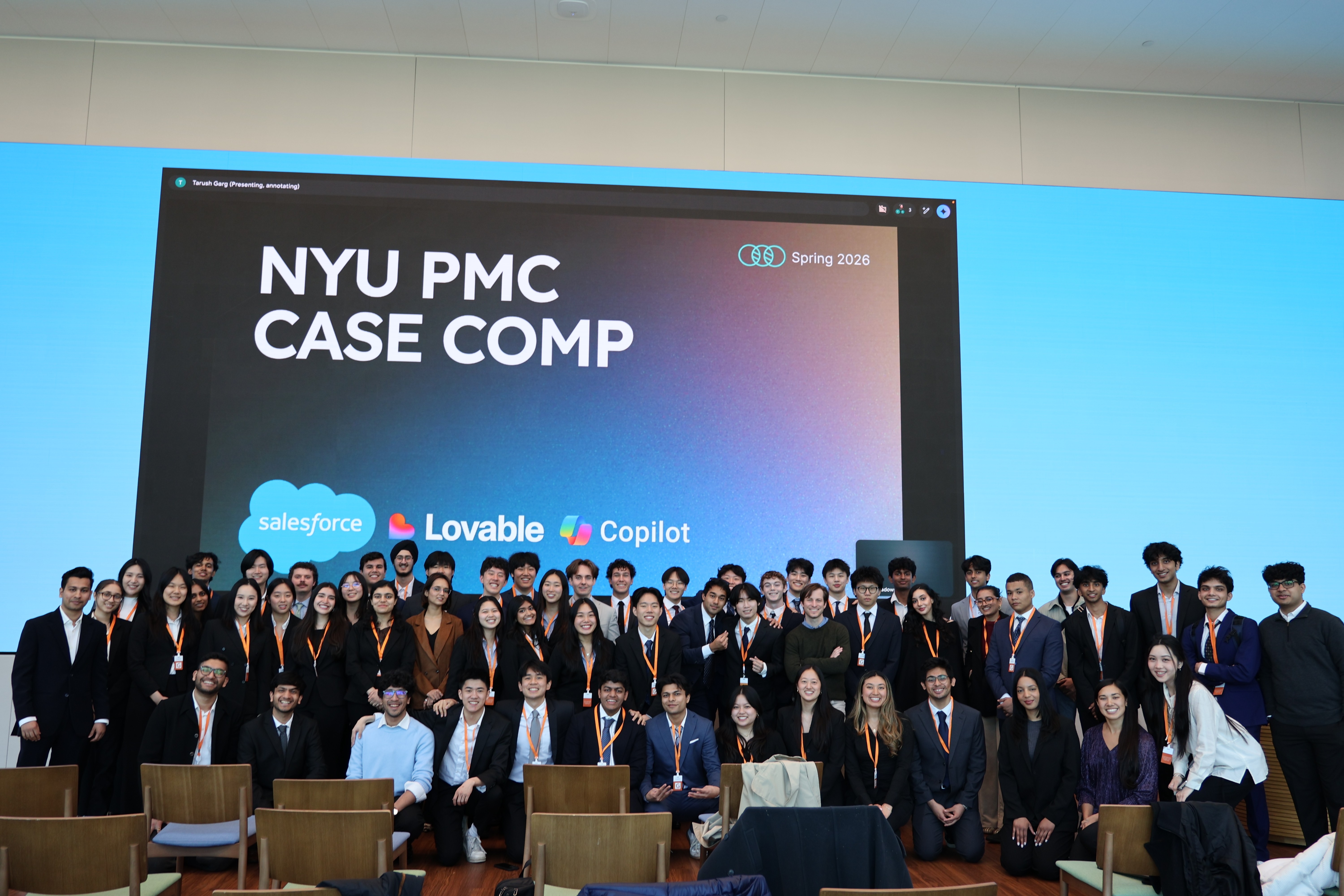
This project was built for the NYU Product Management Club's Case Competition in collaboration with Salesforce. We were tasked with identifying a real problem within Salesforce's ecosystem and pitching a product solution. I worked on this project alongside 2 other sophmores at NYU.
This project was built for the NYU Product Management Club's Case Competition in collaboration with Salesforce. We were tasked with identifying a real problem within Salesforce's ecosystem and pitching a product solution. I worked on this project alongside 2 other sophmores at NYU.
We zeroed in on Agentforce, Salesforce's AI agent platform, because the adoption numbers were honestly pretty bad. Only about 5% of Salesforce's 150,000+ customers were actually paying for it, and most mid-market companies couldn't justify the cost without seeing clear ROI. We designed and built "Salesforce Pulse," a proactive intelligence layer on top of Agentforce that fixes the core reasons people weren't using it. The whole thing went from research and design in Figma to a fully functional demo built out through Lovable and Cursor
We zeroed in on Agentforce, Salesforce's AI agent platform, because the adoption numbers were honestly pretty bad. Only about 5% of Salesforce's 150,000+ customers were actually paying for it, and most mid-market companies couldn't justify the cost without seeing clear ROI. We designed and built "Salesforce Pulse," a proactive intelligence layer on top of Agentforce that fixes the core reasons people weren't using it. The whole thing went from research and design in Figma to a fully functional demo built out through Lovable and Cursor
Tools Used
Figma
Design Tool

Claude
LLM

Lovable
AI Builder
Tools Used
Figma
Design Tool
Claude
LLM
Lovable
AI Builder
Tools Used
Figma
Design Tool
Claude
LLM
Lovable
AI Builder
Created
Created
2026
Process
Process
Identifying Pain Points
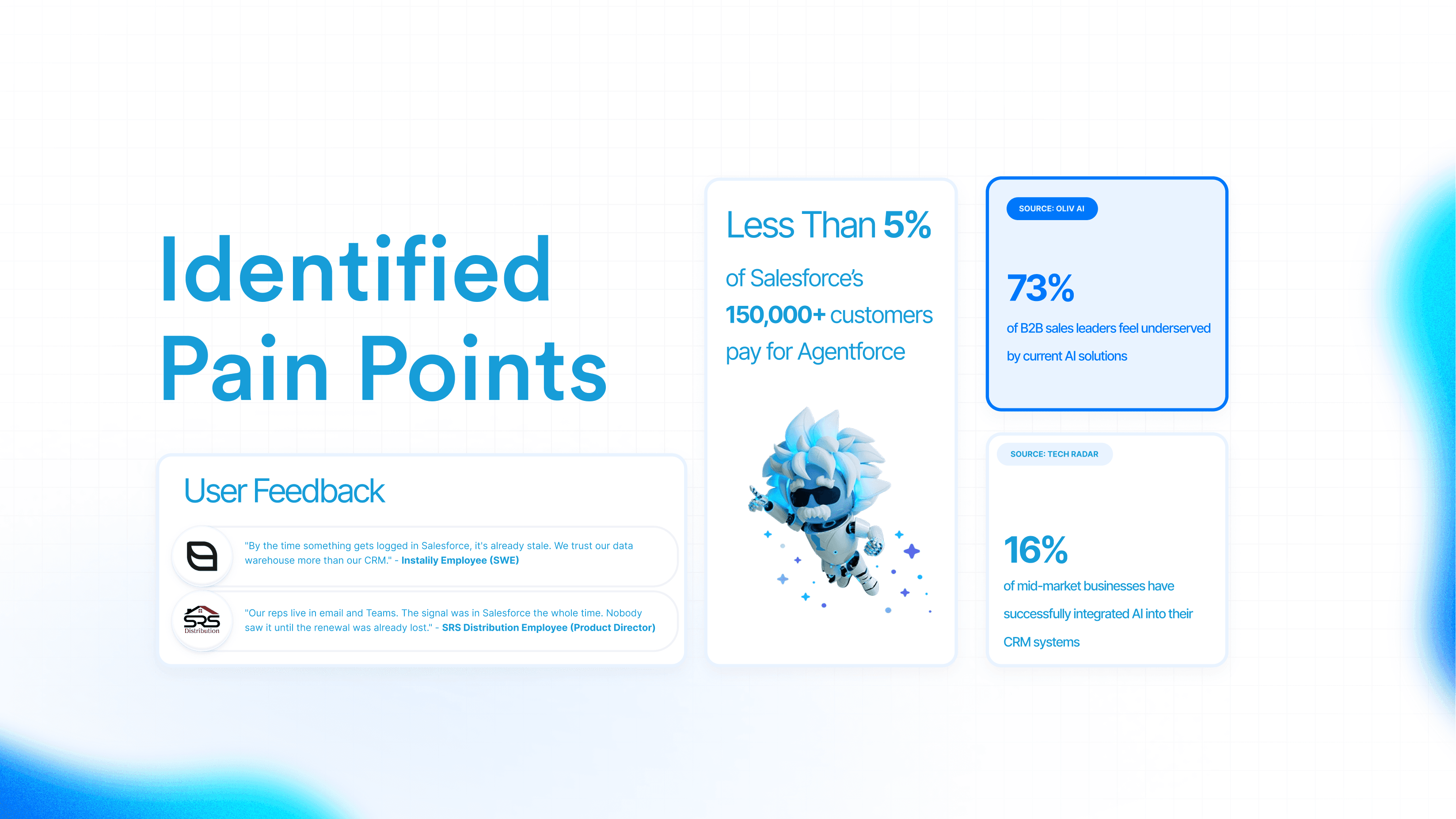
The first thing we wanted to understand was why companies weren't adopting Agentforce, and the answer became pretty obvious once we started digging. 76% of CRM users say less than half of their data is even accurate, and Agentforce was pulling from that same stale data, leading to hallucination rates as high as 27%. On top of that, 73% of B2B sales leaders said they felt underserved by current AI solutions.
We also talked to people actually working in the space and kept hearing the same frustration. By the time anything gets logged in Salesforce, it's already outdated, and reps are living in email and Teams, so the actual signals sitting in the CRM go completely unnoticed. That disconnect between where work happens and where data lives was the root of everything we built around and heavily influenced our solution concept.
Expanding on Agentforce through "Pulse"
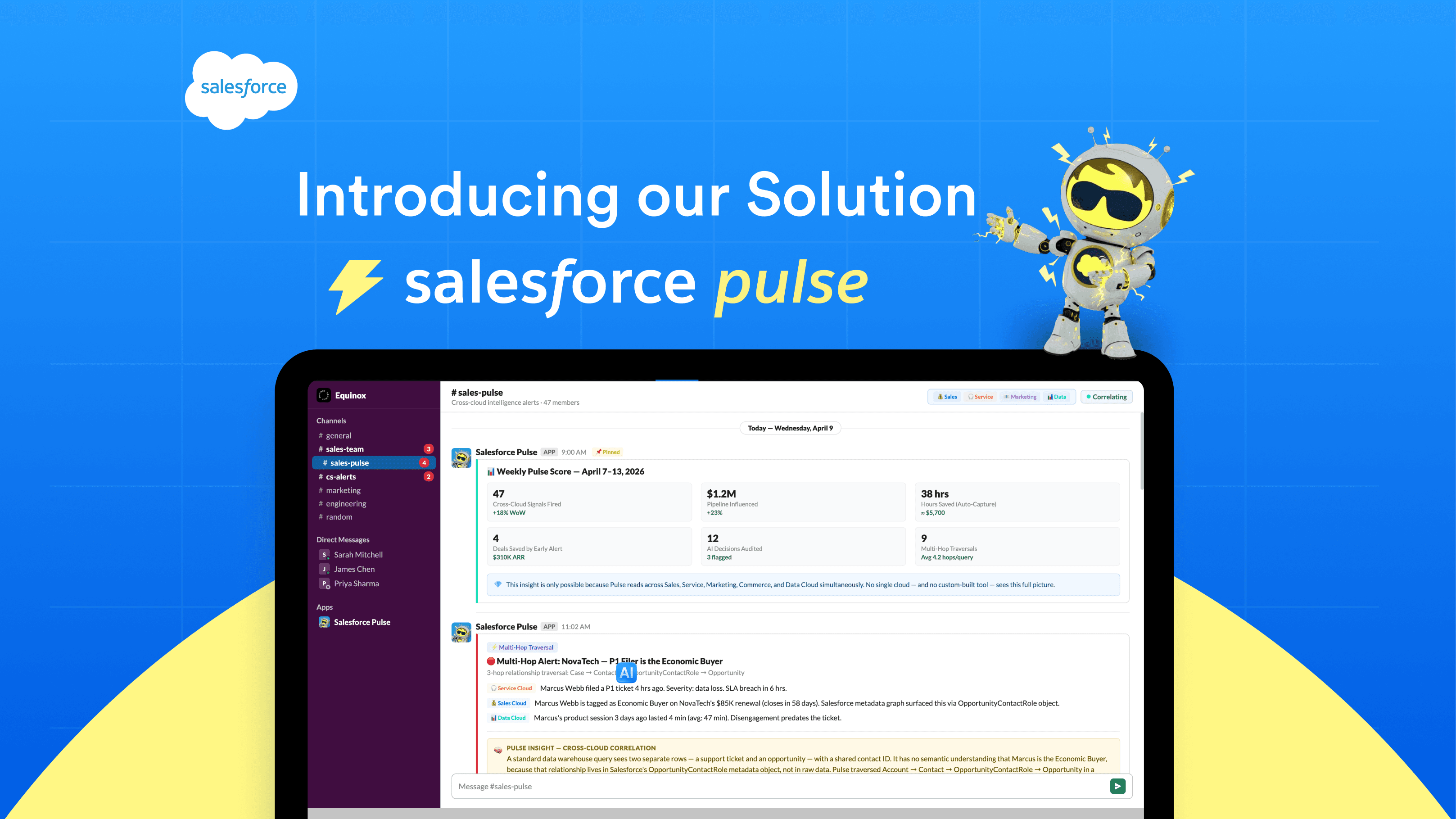
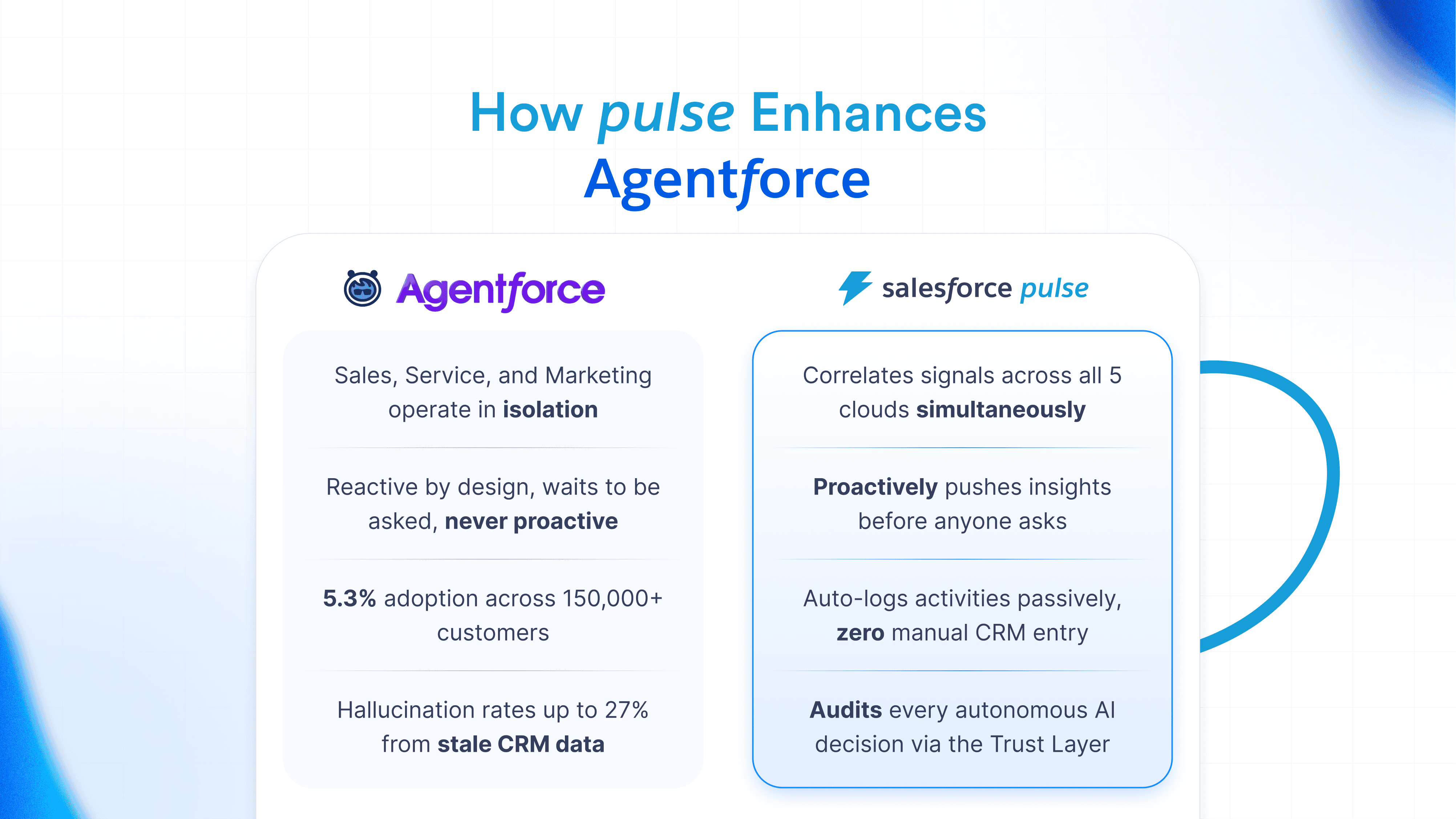
Pulse was built to fix the reason people weren't using Agentforce in the first place. Instead of waiting for users to ask it questions or manually log their activities, Pulse auto-captures data passively so there's zero manual CRM entry and proactively surfaces insights before anyone even thinks to look. It also audits every autonomous AI decision through the Trust Layer, which directly tackles the accuracy concerns keeping companies away.
The key differentiator is that Pulse works across all five Salesforce clouds at the same time rather than treating Sales, Service, and Marketing as completely separate worlds. We deployed a working demo on Vercel to show how this would actually look and feel inside the Salesforce ecosystem, making it easy to see the value without needing to imagine it.
Expanding on Agentforce through "Pulse"
Pulse was built to fix the reason people weren't using Agentforce in the first place. Instead of waiting for users to ask it questions or manually log their activities, Pulse auto-captures data passively so there's zero manual CRM entry and proactively surfaces insights before anyone even thinks to look. It also audits every autonomous AI decision through the Trust Layer, which directly tackles the accuracy concerns keeping companies away.
The key differentiator is that Pulse works across all five Salesforce clouds at the same time rather than treating Sales, Service, and Marketing as completely separate worlds. We deployed a working demo on Vercel to show how this would actually look and feel inside the Salesforce ecosystem, making it easy to see the value without needing to imagine it.
Expanding on Agentforce through "Pulse"
Pulse was built to fix the reason people weren't using Agentforce in the first place. Instead of waiting for users to ask it questions or manually log their activities, Pulse auto-captures data passively so there's zero manual CRM entry and proactively surfaces insights before anyone even thinks to look. It also audits every autonomous AI decision through the Trust Layer, which directly tackles the accuracy concerns keeping companies away.
The key differentiator is that Pulse works across all five Salesforce clouds at the same time rather than treating Sales, Service, and Marketing as completely separate worlds. We deployed a working demo on Vercel to show how this would actually look and feel inside the Salesforce ecosystem, making it easy to see the value without needing to imagine it.
Conclusion
Overall, creating Salesforce Pulse was a really rewarding project to work on because it forced us to think about a real product problem from every angle. We went from researching why Agentforce adoption was so low to mapping out the competitive landscape to actually designing and building a working solution in a pretty tight timeframe. The biggest thing I took away from this was how important it is to ground your product decisions in what users are actually experiencing rather than what looks good on paper. Talking to people in the industry early on completely shaped the direction we went in.
If we had more time, I would've loved to build out the demo further and stress test it with real CRM data to see how Pulse actually performs under realistic conditions. I also think there's a lot more we could've explored around the Trust Layer auditing side of things, because that ended up being one of the strongest parts of our pitch, but we only scratched the surface of it in the prototype. Overall though, this competition pushed me to think more critically about enterprise product design and how to communicate a technical solution in a way that actually resonates with stakeholders.
Link to Full Presentation
The link below is the slide deck and functional demo we presented at the PMC x Salesforce pitch competition:
https://drive.google.com/file/d/164BrG9BLOnnY3sFw0gC-_XwZrul5GEl4/view?usp=sharing
Conclusion
Overall, creating Salesforce Pulse was a really rewarding project to work on because it forced us to think about a real product problem from every angle. We went from researching why Agentforce adoption was so low to mapping out the competitive landscape to actually designing and building a working solution in a pretty tight timeframe. The biggest thing I took away from this was how important it is to ground your product decisions in what users are actually experiencing rather than what looks good on paper. Talking to people in the industry early on completely shaped the direction we went in.
If we had more time, I would've loved to build out the demo further and stress test it with real CRM data to see how Pulse actually performs under realistic conditions. I also think there's a lot more we could've explored around the Trust Layer auditing side of things, because that ended up being one of the strongest parts of our pitch, but we only scratched the surface of it in the prototype. Overall though, this competition pushed me to think more critically about enterprise product design and how to communicate a technical solution in a way that actually resonates with stakeholders.
Link to Full Presentation
The link below is the slide deck and functional demo we presented at the PMC x Salesforce pitch competition:
https://drive.google.com/file/d/164BrG9BLOnnY3sFw0gC-_XwZrul5GEl4/view?usp=sharing
Conclusion
Overall, creating Salesforce Pulse was a really rewarding project to work on because it forced us to think about a real product problem from every angle. We went from researching why Agentforce adoption was so low to mapping out the competitive landscape to actually designing and building a working solution in a pretty tight timeframe. The biggest thing I took away from this was how important it is to ground your product decisions in what users are actually experiencing rather than what looks good on paper. Talking to people in the industry early on completely shaped the direction we went in.
If we had more time, I would've loved to build out the demo further and stress test it with real CRM data to see how Pulse actually performs under realistic conditions. I also think there's a lot more we could've explored around the Trust Layer auditing side of things, because that ended up being one of the strongest parts of our pitch, but we only scratched the surface of it in the prototype. Overall though, this competition pushed me to think more critically about enterprise product design and how to communicate a technical solution in a way that actually resonates with stakeholders.
Link to Full Presentation
The link below is the slide deck and functional demo we presented at the PMC x Salesforce pitch competition:
https://drive.google.com/file/d/164BrG9BLOnnY3sFw0gC-_XwZrul5GEl4/view?usp=sharing